
Online Learning: Pros and Cons – Is It the Right Choice?
Introduction
Online learning has become one of the most popular ways to study. Whether you are a school student, college student, or working professional, online courses make it possible to learn from anywhere. With just a smartphone, tablet, or computer and an internet connection, knowledge is available at your fingertips.
However, like every learning method, online education has both advantages and disadvantages. Understanding them can help learners and parents make better decisions.
Pros of Online Learning
1. Learn Anytime, Anywhere
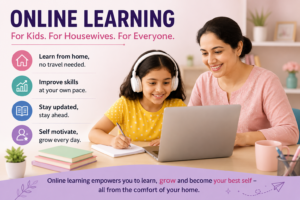
One of the biggest advantages of online learning is flexibility. Students can attend classes or watch recorded lessons from home or while traveling.
2. Saves Time and Money
Online learning reduces travel expenses and saves commuting time. Many high-quality courses are also available at affordable prices or even free.
3. Wide Variety of Courses
Students can choose from thousands of courses on subjects like programming, digital marketing, languages, business, art, and more.
4. Learn at Your Own Pace
Recorded lessons allow learners to pause, replay, and review difficult topics whenever needed.
5. Improves Digital Skills
Using online learning platforms helps students become more comfortable with technology, communication tools, and digital resources.
Cons of Online Learning
1. Lack of Face-to-Face Interaction
Students may miss classroom discussions, group activities, and direct interaction with teachers and classmates.
2. Requires Self-Discipline
Without a regular classroom schedule, some learners find it difficult to stay motivated and complete assignments on time.
3. Internet and Technical Issues
A slow internet connection or device problems can interrupt learning and cause frustration.
4. More Screen Time
Spending many hours in front of a screen may lead to eye strain, headaches, poor posture, and reduced physical activity if breaks are not taken.
5. Limited Practical Experience
Some subjects, such as science experiments, medical training, or hands-on workshops, are difficult to learn effectively through online classes alone.
Tips for Successful Online Learning
- Create a daily study schedule.
- Study in a quiet and organized space.
- Take regular breaks to reduce screen fatigue.
- Participate actively in online discussions.
- Complete assignments on time.
- Balance screen time with physical activities.
Conclusion
Online learning has transformed education by making learning more accessible and flexible. It offers convenience, affordability, and a wide range of learning opportunities. At the same time, it requires self-discipline and responsible use of technology.
The best approach is often a balanced one—combining the flexibility of online learning with real-world practice, interaction, and healthy study habits. When used wisely, online learning can be a powerful tool for personal and professional growth.